.svg)


Supply chain sustainability and resilience are important determinants of success in today’s marketplace. Many organizations have encountered difficulties arising from supply chain bottlenecks which can cause costly delays and disruptions.As a result, businesses are now looking to harness the potential of technology, automation, and regionalization to build efficient operational infrastructure that will prevent or mitigate the detrimental effects these obstacles can impose.In this blog, we examine current advancements utilizing such strategies - specifically Internet of Things (IoT), artificial intelligence (AI), cryptographic blockchain systems, robotic warehouse solutions for automation, nearshoring/reshoring as well as localizing regional supplier networks - in creating systematic approaches towards obstacle-free supply chains capable of achieving optimal performance targets efficiently and reliably.
Technology as a Solution
Role of technology in supply chain management
Technology is an essential key for streamlining the entire supply chain and enabling better visibility over operational performance.The varying degree of technologies exists to help with everything from forecasting, resource planning to smart shipping and visibility in transit confirmation.Technology investments must take into consideration the advantages they bring to reduce costs, as well as improve customer satisfaction that includes: position tracking capabilities, optimizing route evaluation algorithms or implementing predefined rules located on intelligent systems dedicated towards ensuring efficient performances.
Examples of technology-driven solutions
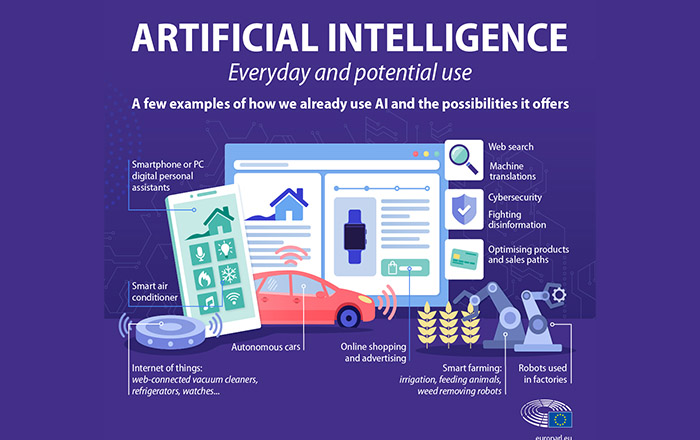
1. Internet of Things (IoT) and real-time tracking
The Internet of Things (IoT) and real-time tracking are emerging as powerful technologies for accurate inventory management. Their increased adoption has fundamentally transformed the way supply chains collect, store, manage, and process data about shipments in motion.IoT technology enables companies to gather information through connected devices located in diverse locations to provide faster access to essential shipment information including relevant vitals such as location coordinates and temperature readings.Further, these systems transmit real-time visibility into all aspects of a product’s life cycle so stakeholders can make expeditious supply chain decisions based on the most up-to-date data available.
2. Artificial intelligence (AI) and predictive analytics
Artificial Intelligence (AI) and predictive analytics are two major player in technology-driven solutions for supply chain optimization. AI leverages data from goods, storage, and personnel to automate processes that previously had to be done manually.With advanced algorithms enabled by computer vision and machine learning capabilities, AI can identify possible difficulties within the system before they become strong enough hindrances.Predictive analytics give a planner an understanding into future trends in customer demand, supplier availability, prices of raw materials, together with other sources of essential information. As such decision makers can more judiciously estimate customer satisfaction by allocating their resources better so as to buck bottlenecks of inventory shortages or labor forces constraints.
3. Blockchain for transparent and secure transactions
Blockchain offers an innovative technology-driven solution for refreshingly transparent and secure transactions. Leveraging distributed ledger technology, data is encrypted across a network of distinct databases in which stakeholders can access only the parts pertinent to them thus sorting out issues such as quality control.Moreover, businesses gain opportunity to increase process speed by eliminating middleman processing additional information off the main network deemed irrelevant.Thus processors maintain records of any changes made in the shared digital database that complies with existing regulations reducing risk and cost throughout contract fulfilment. Ultimately traders need not worry about foreign exchange rate instability or corruption leading to simplified transaction processing system without additional inspection.
Benefits of technology in overcoming bottlenecks
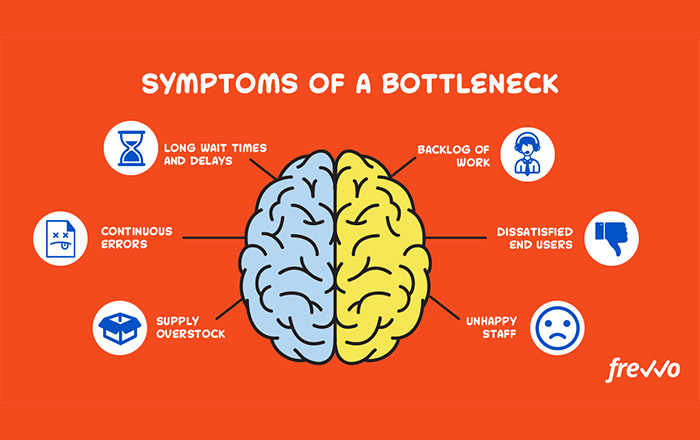
SourceThe adoption of technology in supply chain management has enabled organizations to observe changes quicker and make informed decisions faster, helping them efficiently address supply chain bottlenecks.Advanced technologies such as the Internet of Things (IoT), artificial intelligence (AI), robotics, analytics, blockchain and others contribute extensively towards the optimization and more accelerated turnaround times of supply chains within enterprises.Consequently, through increased transparency benefits can be experienced with lower costs, greater operating efficiency, flexible variants for stakeholders participation and improved customer experiences due to on-time delivery services – reducing lead times drastically which in turn optimize resources needed to maintain control of processes along entire flows present in their networks.
Automation for Streamlined Processes
Advantages of automation in the supply chain
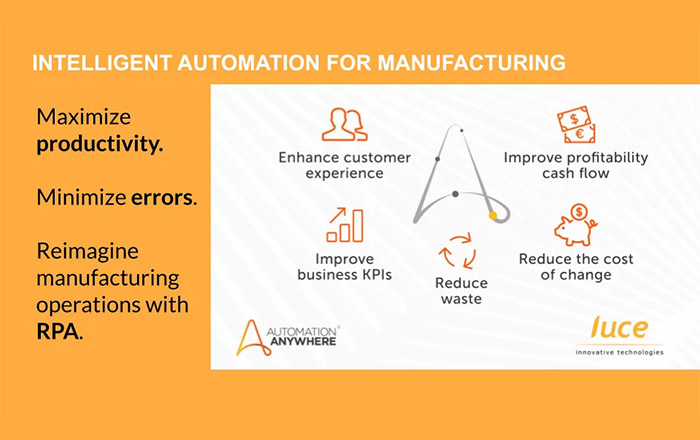
SourceAutomation introduces many advantages within the supply chain that drove efficiency and mitigate bottlenecks. It significantly reduces manual operations, such as data entry, order managing to speed up processes and eliminates inaccuracies to increase accuracy in orders.Additionally, it reduces labor costs since automated infrastructure does not require the hiring of additional workers.Automated operation significantly increases opportunity for understanding customer sales patterns while monitoring production trends with greater responsiveness since often reaction times occur less than 1 second after customer interaction.Lastly, automation helps secures financial transactions associated with consumer preferences since each transaction is securely processed and visible from start to finish.
Examples of automation in different stages of the supply chain
1. Warehouse automation and robotics
One example of automation in the supply chain is warehouse automation and robotics. These practices are used to improve efficiency by reducing manual labor required for loading, sorting, picking, packaging and other operations in a distribution center or warehouse. Automated robots can have cameras identify items for batch processing which allows goods to be dispersed in bulk quickly.Warehouse and robotics provide more effective allocation of products improving turnover rate speed, reduces product losses with quality control systems, enhances data accuracy with cloud storage as well as provides better visibility on its behalf although maintenance costs might remain higher due to complexity of machinery introduced to the process.
2. Automated order processing and fulfillment
Automated order processing and fulfillment helps to streamline the supply chain, allowing for effective management of orders. Businesses can benefit from this automated approach by instantly creating orders out of monthly demand plans, quickly and accurately assign fulfillment methods and delivery dates to according customer requirements.Intelligent order analysis algorithms adjust shipping rates on-time based; pick locations are suggested according to order makeup. AI powered technologies automate communication with customer service teams reducing need consequently referring resources employed in manual audits of expensive 3PL networks activity traceability processes while enhancing productivity levels.
3. Automated inventory management systems
Automated inventory management systems can help to relieve supply chain bottlenecks. This type of solution utilizes sophisticated tracking and forecasting technologies to predict future demand and prevent out-of-stock scenarios. It then automatically notifies suppliers and warehouses about low levels, placing orders when needed while delivering considerable cost savings in storage costs.Thanks to automation, companies can reduce waste, monitor stock performance in real-time, plan efficient freight transports between locations and accurately forecast for seasonal highs and lows more accurately than ever before.This streamlines the purchasing process overall for more strategically focused decisions that focus on clients’ needs with greater assurance of product availability and delivery timescales.
Enhancing efficiency and reducing bottlenecks through automation
Automation is a powerful tool to solve supply chain bottlenecks. By automating steps in the process, companies can enjoy fast and efficient order processing and fulfillment, real-time inventory visibility, accuracy in tracking shipments, reduced labor costs, and better customer satisfaction.Robotic arm applications are increasingly being utilized within warehouses for palletization tasks previously requiring manual labor which improves productivity exponentially. Automated inventory management systems also ensure resource coordination across multiple divisions based on data from different sources.Overall these automation strategies enhance operational efficiency while reducing costs incurred from inaccurate processes resulting in an overall increase of business performance metrics including customer service level and profitability.
Regionalization to Enhance Resilience

Rationale behind regionalization in supply chains
The main rationale behind regionalizing the supply chain is to protect the business from any sudden and unpredictable disruptions as well as ensure better control over its operations and more resilient supplies.Regionalization entails setting up closer local handler-producer ties for faster delivery times and increased reliability.Additionally, managing shorter supply chains helps identify future needs faster and provides a deeper understanding of customers’ demand which are important elements for successfully malleable supply chains
Benefits of regionalization in overcoming bottlenecks
Regionalization is key to understanding supply chain networks and increasing resilience. Regionalizing supply chains can reduce risk by strengthening localized delivery systems, allowing businesses access to brand new markets for procurement and maintain a secure supply chain during unexpected disruptions due to floods, political unrest or other similar incidents.Benefits often include increased cost efficiency despite introducing overhead costs associated with staff and/or new machinery—as having production nearer to an end consumer profits margins whilst reducing bottlenecks-however, the most important part of this is providing easier accessibility by local sourcing improving customer orientation times.
Strategies for implementing regionalization
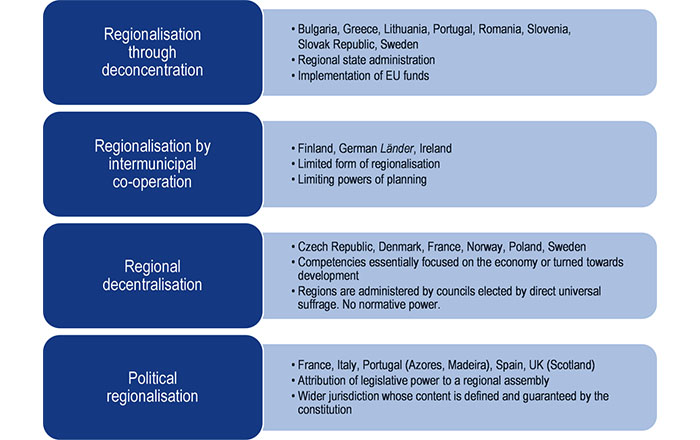
1. Nearshoring and reshoring
Nearshoring and reshoring are strategies for implementing regionalization with the aim of reducing dependence on a single region along the supply chain.It involves partnering with suppliers in key nearby countries or regions to succeed globally, such as those located along the same manufacturing belt or continent.Reshoring is about bringing productions jobs back into North America that were previously sourced from off-shore manufacturers, allowing businesses greater cost and quality control without adversely impacting skill levels among domestic workforce.
2. Developing local supplier networks
Developing local supplier networks is an effective strategy to enable regionalization in the supply chain. This entails connecting to manufacturers, distributors, brokers, wholesalers and other stakeholders close by either on a physical or virtual level.Organizations can also create alliances with like-minded stakeholders to boost their confidence when undertaking domestic deliveries and reduce distance dependency. Moreover, having multiple components vendors leads to diversified risk from raw material procurement up until wast disposal for enhanced supply chain resilience.
3. Reducing dependence on a single region
Reducing dependence on a single region can be achieved through strategies such as nearshoring and reshoring, developing local supplier networks, and diversifying sources of supply. Nearshoring involves production closer to the destination country while reshoring involves bringing production back to its native locations.Companies should also forge collaborations with domestic suppliers to develop local networks for approval process optimization. Diversifying supply geographic base helps to increase flexibility and optimize inventory levels for quicker response time in case of emergency situations.
Mitigating supply chain disruptions through regionalization
Regionalization is an increasingly popular strategy for mitigating supply chain disruptions by ensuring redundant suppliers remain in close geographic proximity.By diversifying production geographically, regionalized strategies increase supply chain resiliency including nearshoring and reshoring of manufacturing activities and developing local supplier networks from a multitude of regions.Moreover, this approach helps to reduce dependence on any single region by consolidating processes locally that could be operated much further away, when required.
Conclusion
Technology, automation, and regionalization are essential to optimization of supply chains and mitigating bottlenecks.A holistic approach which takes advantage of advances in technology, use of automation processes for efficient management, and enhancement of regional resilience should be taken when addressing these problems.With ongoing advancements in research and increasing investment in industry's abilities such as real-time tracking & predictive analytics, the opportunities for positioning businesses for increased success remain hopeful.



.svg)
.png)


.svg)